
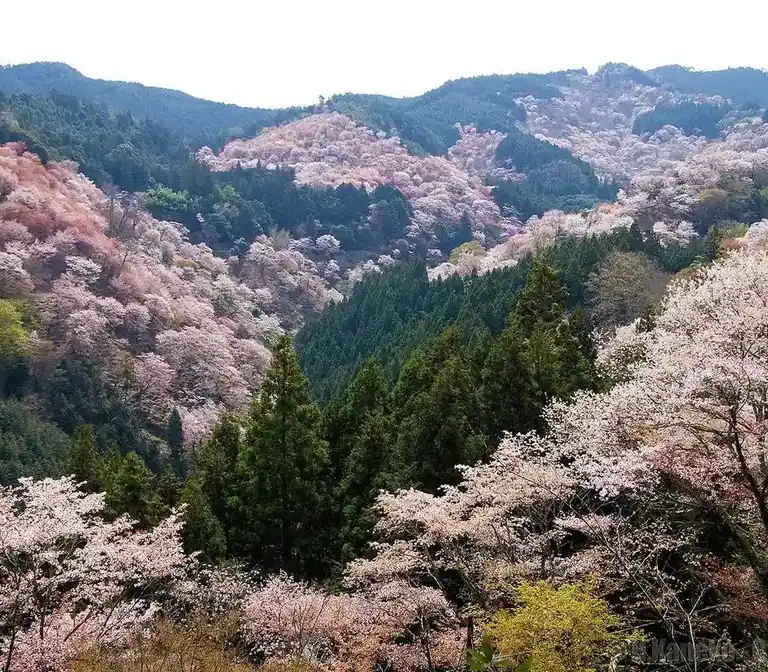
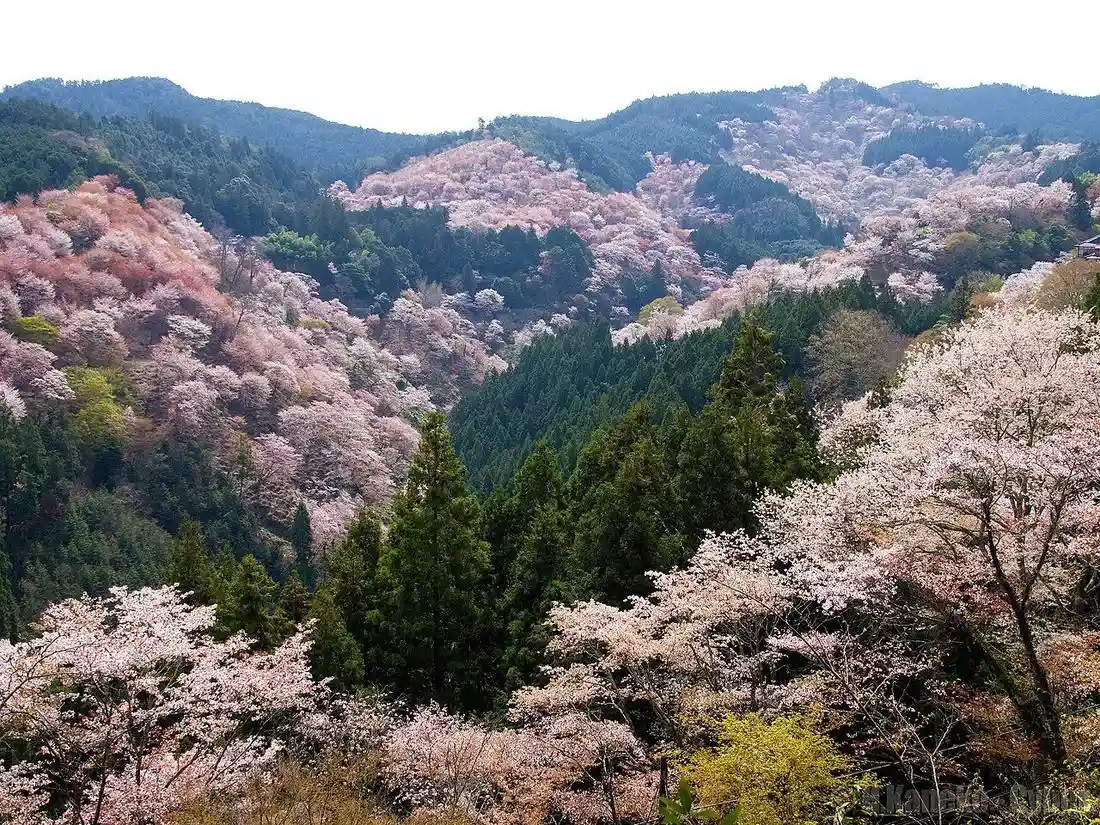
Mount Yoshino in Nara is most famous for its thousand cherry blossoms in spring, but the charm of this mountain goes beyond the blooming season. In spring, about 30,000 mountain cherry blossoms bloom along the mountain. In autumn, the leaves of mountain cherry and maple trees turn orange-red and golden, and ancient temples and mountain villages also change into calm colors. The same mountain scenery has completely different expressions in the two seasons.
Choose a Yoshino visit around the season and scenery you enjoy, as well as your companions’ walking ability. Its cultural sites, landscapes and local food reward a comfortable pace; there is no need to cover every area.
Is it better to visit Mount Yoshino in spring or autumn?
| Comparison | Spring cherry blossom viewing | Autumn maple viewing |
|---|---|---|
| represent landscape | Mountain cherry blossoms bloom continuously from Shimo Senbon to Oku Senbon | Cherry leaves, maple leaves and the temple approach show red and yellow levels |
| Approximate season | In previous years, the main viewing period is from the end of March to April, which varies from district to district. | It gradually changes color from late October to November, depending on the tree species and height. |
| travel atmosphere | The magnificent sea of mountain cherry blossoms attracts a large number of people watching the flowers. | Autumn colors in mountain villages, temple culture and the possibility of lighting up at night |
| more suitable | First time visiting, prefer Japanese mountain cherry blossoms and landscape photography | Like red leaves, temples and quieter mountain village landscapes |
Mountain slopes and walking are in demand in both seasons. The "Senbonzakura" in spring is the landscape of the entire hillside; in autumn, the color changes of different tree species and locations are the highlight, and the flowering sequence in spring cannot be directly applied.
Mount Yoshino’s Spring Cherry Landscape
Mount Yoshino is dominated by white mountain cherry blossoms. Flowers and new leaves are intertwined, and there are soft and rich colors in the distance. The hillsides, ancient temples and settlements together form the landscape, making cherry blossom viewing not only looking at flowers, but also like walking into a Japanese spring landscape painting.
The cherry trees also have a religious history. According to tradition, Shugendo founder En no Gyoja carved an image of Zao Gongen from mountain-cherry wood, and the trees came to be protected across generations. Mount Yoshino now forms part of the UNESCO World Heritage property Sacred Sites and Pilgrimage Routes in the Kii Mountain Range.Mountain cherry blossoms, mountain topography and cultural history are the characteristics that distinguish Mount Yoshino from cherry blossom viewing in the city.
Shimo, Naka, Kami & Oku Senbon: Choosing an Area
The four Senbon areas are cherry-viewing zones at different elevations, rather than four individual landmarks. Your choice affects both the views and the amount of walking required.
| Cherry blossom viewing area | Landscape features | Travel arrangements considerations |
|---|---|---|
| Shimo Senbon | Near the entrance at the foot of the mountain, cherry blossoms interweave with the mountain village scenery | Relatively easy to arrange, but there are still ramps and crowds |
| Naka Senbon | Cherry blossoms, temples and streets complement each other | Suitable for travelers who combine flower viewing, culture and dining |
| Kami Senbon | Enjoy the distant view of cascading mountain cherry blossoms from a higher vantage point | There is a stronger sense of outlook, and the walking gradient and physical demands increase. |
| Oku Senbon | Cherry blossoms in the forest and the atmosphere of the mountains, the flowering period is usually late | High transportation connections and walking burden, not suitable for every traveler |

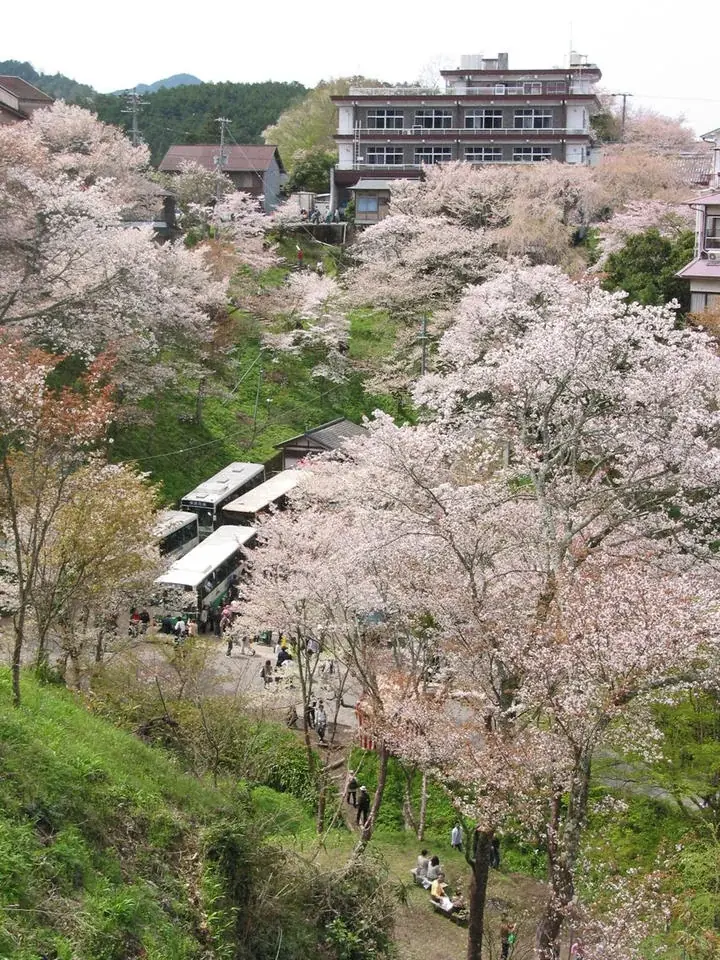
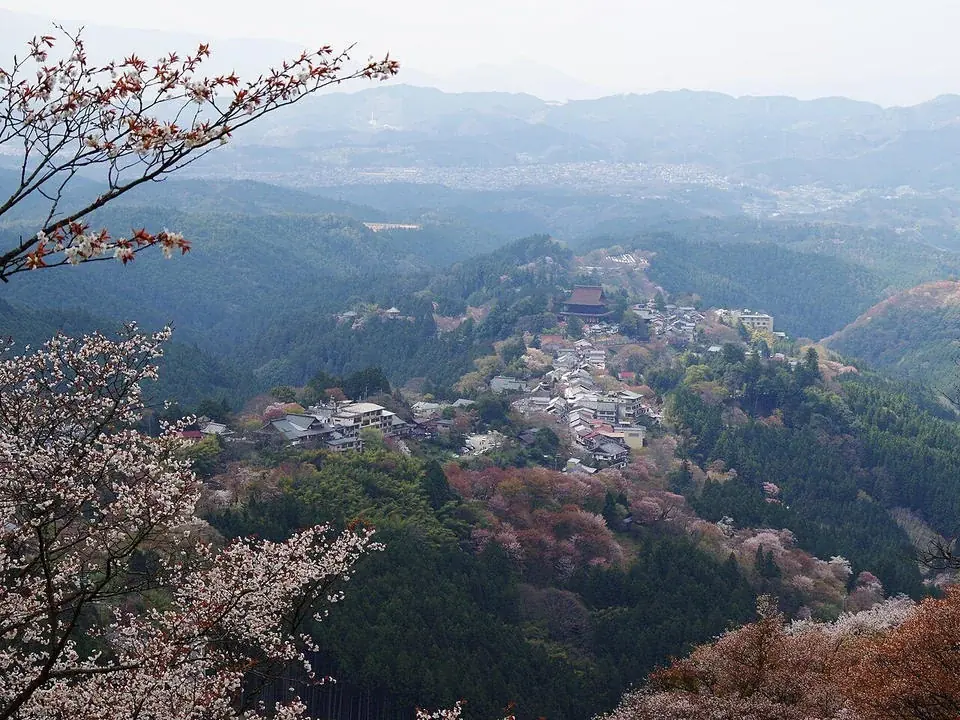
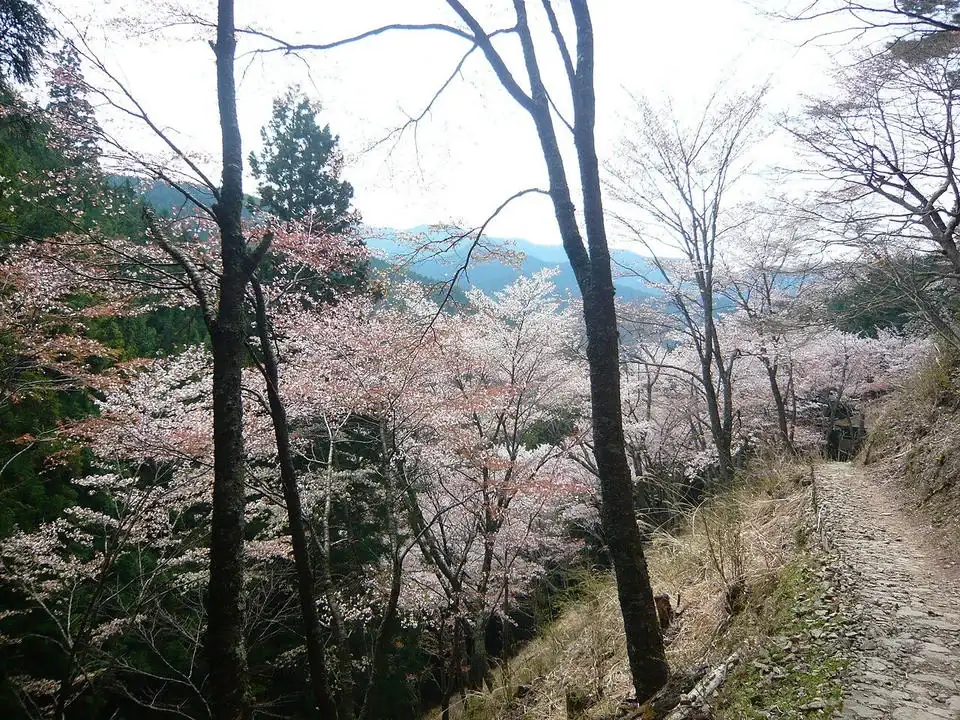
Higher is not automatically better. Families with young children or older relatives may prefer not to continue to Oku Senbon, while photographers with good walking stamina may enjoy Kami Senbon’s views.Flower condition and fitness should take priority over the number of attractions.
Cherry Blossom Timing on Mount Yoshino
In previous years, Mount Yoshino blooms roughly in the order of Shimo Senbon, Naka Senbon, Kami Senbon, and Oku Senbon. The entire mountain does not bloom on the same day. The following is a compilation of historical records published by the Mount Yoshino Tourism Association and Yoshino Town:
| area | Full opening date in 2025 | Full opening date in 2026 |
|---|---|---|
| Shimo Senbon | April 8 | April 1 |
| Naka Senbon | April 9 | April 2 |
| Kami Senbon | April 10 | April 4 |
| Oku Senbon | April 15 | April 9 |
In the past two years, Shimo Senbon's full opening day has been one week apart. When planning cherry blossom viewing, you should confirm your travel period Which area may be in better viewing condition, it is not appropriate to think that the whole mountain is the most beautiful on a certain day.
As of November 2, 2026, the official flowering forecast, cherry blossom viewing period transportation arrangements and spring lighting information for 2027 have not yet been announced. At this time, it is suitable to choose the landscape and travel method you want to experience first, and then adjust the arrangement after the official update.
Temples, Shrines & the History Behind the Blossoms
Kinpusenji Temple: Cherry Trees & Shugendo
Kinpusenji Temple is an important cultural landmark of Mount Yoshino. The majestic wooden building of the national treasure Zaodo Hall is in sharp contrast with the surrounding mountains and forests, and also helps visitors understand the significance of Mount Yoshino as a holy place of faith. The special opening of the secret Buddha in the temple is held in accordance with the annual announcement. Whether it will be opened in 2027 and the date shall be subject to the announcement of the temple.
Yoshimizu Shrine: The Ichimoku Senbon View
Yoshimizu Shrine has connections with the Southern Court, Minamoto no Yoshitsune and Toyotomi Hideyoshi. Its Ichimoku Senbon viewpoint takes in cherry-covered slopes around Naka Senbon and Kami Senbon, appealing to visitors interested in landscape photography and history. Actual views depend on blossom conditions, weather and crowds.
Yoshino Shrine: Southern Court History
Yoshino Shrine enshrines Emperor Go-Daigo, providing another angle to understand the history of the Southern Dynasties in Yoshino. It is not the main viewing area to replace Senbonzakura; for tourists who prefer shrine culture or want to appreciate the red leaves in autumn, it is also worth considering the overall theme.
Yoshino Tofu, Miwa Somen & More Spring Scenery in Nara
Tofu Chaya Hayashi: Local Food in Yoshino
The Tofu Chaya Forest in Mount Yoshino features traditional handmade tofu dishes and tofu desserts. For travelers who want to have a comfortable meal time between flower viewing, tasting local cuisine is also a way to get to know Mount Yoshino. Waiting tables and actual business arrangements must still be considered during popular spring periods.
Miwa Yamamoto: Nara’s Somen Tradition
Miwa Yamamoto’s main shop in Sakurai offers an introduction to Nara’s fine somen noodles. It is outside Mount Yoshino and currently does not accept dining reservations. Whether to include it depends on your trip length, companions and blossom conditions; it need not be part of every Yoshino visit.
Fujiwara Palace Site: Cherry Blossoms & Rapeseed Flowers
Fujiwara Palace Site in Kashihara offers broad historic grounds and spring flower fields, contrasting with Yoshino’s layered mountain-cherry landscape. Kashihara’s official records show cherry blossoms and rapeseed flowers in bloom together in early April 2026; whether they coincide in 2027 depends on that season’s conditions. The site is a component of the UNESCO World Heritage property Ancient Capitals of Asuka and Fujiwara, combining spring scenery with the history of Japan’s early capitals.
Choosing Experiences for Your Group
| Travelers | Can be prioritized for evaluation | Arrange key points |
|---|---|---|
| Families with children | Shimo Senbon, Naka Senbon | Control your walking range and reserve time for rest and meals |
| Older travelers | Naka Senbon cultural attractions, part of Shimo Senbon | Ramps, stairs and waiting times are more important than the number of attractions |
| photography traveler | Kami Senbon Outlook, Yoshimizu Shrine | Select the screen according to flower conditions, weather, light and fitness |
| Small groups | Matching of mountain cherry landscape and local culture | Choose temples, restaurants, or surrounding spring scenery based on your interests |
Mount Yoshino has a significant height difference. Traffic restrictions may be implemented in spring, and bus and cable car arrangements may also change depending on the year and date. Even with connections, there is still some level of walking demand in the mountains. The core of travel planning is not to visit the four thousand books, but to appreciate Mount Yoshino at a pace that suits you.
Autumn on Mount Yoshino: Leaves, Temples & Village Scenery
The autumn colors at Mount Yoshino are not just maple leaves. The leaves of mountain cherry blossoms that have bloomed in spring will also turn yellow and red in autumn; maple trees bring more vivid red colors at different times. Therefore, even if you visit on the same day, you may see that some hillsides are already stained with autumn colors, while other trees are still changing color.
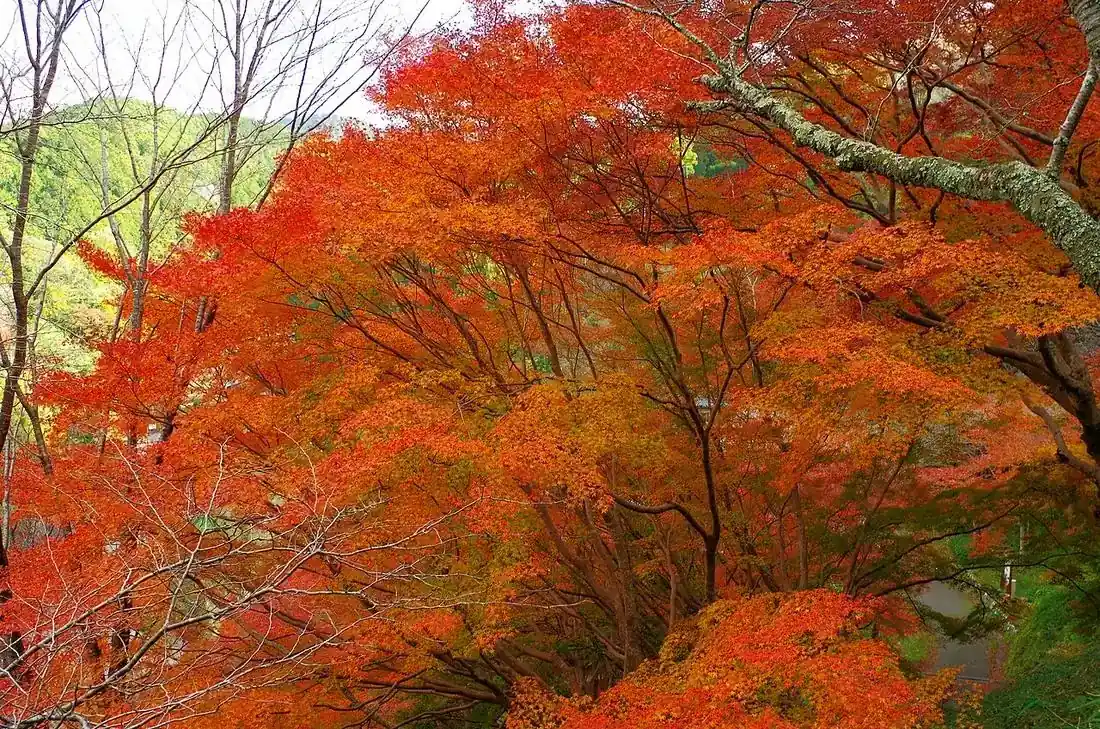
Nanamagarizaka, Shimo Senbon & Temple Approaches
The autumn leaves in Nanamagarizaka area, the mountain village scenery near Shimo Senbon, and the historical streets around Kinpusenji Temple are suitable for travelers who want to enjoy the autumn leaves and cultural attractions at the same time. If you like the quiet feeling of temples, you can also consider Yoshino Shrine or the area around Yoshimizu Shrine, but not everywhere you can see large maple trees of the same color.
Kami Senbon, Oku Senbon and Mount Takagi
Autumn is often felt earlier in higher places. Located near the Mount Takagi Observation Deck, Hanayagura area, and Oku Senbon, it is suitable for travelers who value mountain views and forest colors, and have sufficient walking stamina. In autumn, you also need to choose an area based on the climate and actual leaf conditions of the season, rather than just judging by altitude.
Autumn Leaf Timing & Evening Illuminations
Official tourism information from Nara Prefecture lists the common viewing period for Mount Yoshino’s red leaves as from early November to early December; however, mountain cherry leaves tend to change color earlier, while maple leaves turn red successively, so the autumn colors do not appear all over the mountain at the same time. In 2026, the Mount Yoshino Tourism Association has also announced that the autumn leaves will be lit up to illuminate some of the shrines and the landscape near the temple. The date and scope of the lighting is an annual event, and the appropriate time slot should be selected based on the announcement of the year.
If you want to compare other autumn foliage attractions and seasonal events in Kansai, you can read more about TUKISUMI Kansai maple viewing special topic;This article focuses on the spring and autumn characteristics of Mount Yoshino itself.
Mount Yoshino: Frequently Asked Questions
When will the cherry blossoms on Mount Yoshino be in full bloom in 2027?
There is currently no official date for 2027. In the past, it usually bloomed from the end of March to April, but the time is different in each region, so it needs to be judged according to the annual announcement.
Do you have to go to Oku Senbon to see Senbonzakura?
No need. Shimo Senbon, Naka Senbon and Kami Senbon each have their own characteristics; whether to arrange Oku Senbon should take into account the conditions of the year and the fitness of the travelers.
What is the biggest difference between Mount Yoshino and cherry blossom viewing in Kyoto and Osaka?
Mount Yoshino combines cherry-covered slopes at different elevations with temples, Shugendo traditions and mountain-village culture.
Is Mount Yoshino also worth planning for autumn?
Worth it. Autumn is a good time to enjoy the colors of cherry and maple leaves, temples, and mountain village landscapes; however, viewing from high places and walking in the forest still require fitness, and the lighting of lanterns is based on annual announcements.
Can it be combined with other spring attractions in Nara?
Depending on your plans, you could consider the flowers at Fujiwara Palace Site or Miwa somen culture in Sakurai. Both are outside Mount Yoshino and require separate travel time.
Plan a Spring or Autumn Visit to Yoshino
Some people want to overlook the mountains full of Senbonzakura in spring, others prefer the autumn leaves and the calm atmosphere of temples; others pay more attention to mountain village cuisine, or extend their appreciation of the flower view of Fujiwara Palace ruins in spring. These expectations don't all fit into the same trip.
If you are planning to visit Nara for cherry blossom viewing in spring or maple viewing in autumn, you can organize it first Estimated departure month, number and age of the group, walking ability, and the most anticipated landscape or cultural experience. TUKISUMI can help evaluate suitable experiences in the Mount Yoshino area and around Nara based on your needs.
Welcome to consult TUKISUMI Kansai customized travel. Enter Kansai at your own pace.
Official information: Yoshino Tourism: Autumn Illuminations · UNESCO: Ancient Capitals of Asuka and Fujiwara